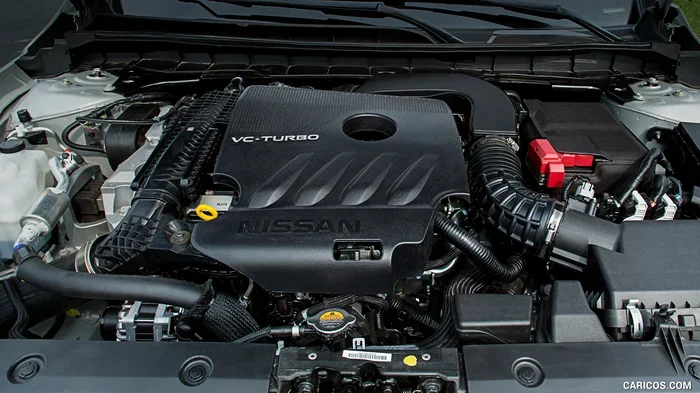
How Many O2 Sensors Does a Nissan Altima Actually Have
A Nissan Altima typically has 4 O2 sensors — two upstream and two downstream — but the exact number depends on the model year and engine type. These oxygen sensors play a critical role in monitoring exhaust gases and keeping your engine running efficiently. Knowing how many sensors your Altima has helps you diagnose issues, save on repairs, and maintain peak engine performance.
If you own a Nissan Altima and have ever wondered about the sensors keeping your engine running the way it should, you are in the right place. The O2 sensor, also known as the oxygen sensor, is one of the most important components in your car’s exhaust and fuel system. It tells your engine’s computer exactly how much fuel is being burned and whether the mixture is too rich or too lean. Without working sensors, your Altima simply cannot perform at its best.
So how many O2 sensors does a Nissan Altima actually have? The short answer is that most modern Nissan Altimas come equipped with four oxygen sensors. However, the exact number can vary depending on the model year, engine size, and trim level. Understanding this detail matters a lot if you are troubleshooting issues, planning a repair, or just trying to learn more about your vehicle.
In this guide, we will break down everything you need to know. We will cover the exact number of sensors, where they are located, what they do, what happens when they fail, and how to replace them. Whether you are a DIY mechanic or just a curious car owner, this article has you covered.
Key Takeaways
- Most Nissan Altimas have 4 O2 sensors: two upstream and two downstream sensors for optimal fuel management.
- The exact number varies by engine and model year: older models and different trims may have fewer sensors.
- Upstream sensors measure exhaust before the catalytic converter: downstream sensors monitor what comes out after it.
- Failing O2 sensors cause poor fuel economy, rough idling, and a check engine light: don’t ignore these signs.
- Replacing O2 sensors is a manageable DIY job: but proper location knowledge makes it much easier.
- Regular maintenance keeps sensors healthy: use quality fuel and address exhaust leaks promptly.
- O2 sensors are not the same as the catalytic converter: they work together but serve different purposes.
📑 Table of Contents
How Many O2 Sensors Does a Nissan Altima Have
The Nissan Altima is a popular midsize sedan that has been on the market for decades. Over the years, Nissan has used different engine configurations in the Altima, and the number of O2 sensors has changed with each generation. Most people assume all cars have the same number of sensors, but that is not always true.
Here is a general breakdown of how many O2 sensors different Nissan Altima models have:
- 2.5L 4-cylinder engines (most common): 4 O2 sensors
- 3.5L V6 engines (older Altima models): 4 O2 sensors
- Earlier models (pre-2002): 2 O2 sensors in some cases
The 4-sensor setup is the standard for most modern Altimas. This is because federal emissions regulations require more precise monitoring of exhaust gases. Each sensor plays a specific role, and they all work together to keep your engine running cleanly and efficiently. If your Altima has a 2.5L or 3.5L engine, you can almost certainly expect it to have four sensors.
Why the Number Matters
Knowing the exact number of O2 sensors in your Altima helps when you are reading diagnostic trouble codes or shopping for replacement parts. If a mechanic tells you you have a bad sensor, you will know which one they are talking about. It also helps you understand the overall health of your vehicle’s emissions system and fuel injection setup.
Understanding What an O2 Sensor Does
Before we dive into locations and replacement, let us talk about what an O2 sensor actually does. The oxygen sensor measures the amount of oxygen in your car’s exhaust gases as they leave the engine. This information gets sent to the engine control unit, also known as the ECU or powertrain control module.
The ECU uses this data to adjust the air-fuel mixture in real time. If the sensor detects too much oxygen, it means the mixture is too lean. If there is too little oxygen, the mixture is too rich. The ECU then makes micro-adjustments to keep everything balanced.
This process happens thousands of times per minute. It is essential for several reasons:
- Better fuel economy: A properly balanced mixture means you use less gas.
- Lower emissions: Your car produces fewer harmful pollutants.
- Smoother engine operation: The engine runs more evenly and responds better.
- Longer catalytic converter life: The converter works less hard when the mixture is correct.
If your O2 sensor fails or becomes sluggish, all of these things suffer. Your Altima might get worse gas mileage, run rough, or fail an emissions test. In some cases, a bad sensor can even trigger the check engine light, which is often the first sign that something is wrong.
Upstream vs. Downstream Sensors
Not all O2 sensors are the same. In a 4-sensor setup, you have two upstream sensors and two downstream sensors. Here is the difference:
- Upstream sensors are located before the catalytic converter. They measure the oxygen content of raw exhaust gases coming out of the engine. These sensors are the most active and have the biggest impact on fuel delivery.
- Downstream sensors sit after the catalytic converter. They monitor the oxygen levels of the cleaned exhaust gases. Their main job is to confirm that the catalytic converter is working properly.
Both types matter, but upstream sensors tend to fail more often because they are exposed to higher temperatures and harsher conditions. If you are experiencing issues with your Altima’s engine performance, there is a good chance an upstream sensor is the culprit.
O2 Sensor Locations in the Nissan Altima
Finding the O2 sensors in your Nissan Altima is important for diagnostics and replacement. The sensors are located along the exhaust system, and each one has a specific position. Let us walk through where each sensor is typically found.
Sensor 1 — Bank 1, Upstream
The first sensor is located on the exhaust manifold or the exhaust pipe right after the manifold, on the side of the engine that contains cylinder 1. This is the upstream sensor that measures raw exhaust gases before they reach the catalytic converter. On most Nissan Altimas, this is the sensor closest to the engine.
Sensor 2 — Bank 1, Downstream
The second sensor sits behind the catalytic converter on the same side. It reads the oxygen levels in the exhaust after it has passed through the converter. This sensor helps the ECU determine whether the converter is doing its job properly.
Sensor 3 — Bank 2, Upstream
The third sensor is on the opposite bank of the engine and is also positioned before the catalytic converter. For a 4-cylinder Altima, Bank 2 is typically the other side of the exhaust system. For a V6 Altima, this is the second exhaust bank.
Sensor 4 — Bank 2, Downstream
The fourth sensor sits behind the catalytic converter on Bank 2. It mirrors the function of Sensor 2 but for the opposite side of the exhaust system.
Keep in mind that on a 4-cylinder Altima, there is technically only one exhaust bank, but Nissan still uses the Bank 1 and Bank 2 labeling for the two sensors on each side of the catalytic converter system. This can be confusing, but the key takeaway is that there are two sensors before the converter and two after it.
When you are working on your Altima’s exhaust system, always give yourself plenty of room and make sure the engine is cool. The sensor locations can be tight, and the exhaust components get extremely hot during operation. If you are unsure, consult your owner’s manual or a repair guide specific to your model year.
Symptoms of a Failing O2 Sensor
A failing O2 sensor can cause a range of problems in your Nissan Altima. The tricky part is that these symptoms often mimic other issues, which is why many people misdiagnose the problem. Here are the most common signs that one or more of your oxygen sensors are going bad.
Check Engine Light
The most obvious sign is the check engine light on your dashboard. When an O2 sensor sends abnormal readings to the ECU, the computer stores a trouble code and illuminates the light. Common codes related to O2 sensor failure include P0130, P0133, P0136, and P0171. If you see the check engine light, it is worth getting a diagnostic scan done as soon as possible.
Poor Fuel Economy
If your Altima is suddenly getting worse gas mileage than usual, a bad O2 sensor could be the cause. When a sensor fails, it often sends incorrect data to the ECU, causing the engine to run too rich. This means your car burns more fuel than it needs to, and you will feel the difference at the pump.
Rough or Irregular Idle
A failing sensor can disrupt the air-fuel mixture, leading to a rough or unstable idle. Your Altima might shake or vibrate when sitting at a stoplight. You may also notice hesitation or stumbling when you accelerate.
Failed Emissions Test
Since O2 sensors are a key part of the emissions system, a bad sensor can cause your Altima to fail an emissions inspection. If your state requires annual or biennial testing, this is one of the first things a technician will check.
Rotten Egg Smell from the Exhaust
A rich fuel mixture caused by a faulty sensor can produce a strong sulfur or rotten egg smell from the exhaust pipe. This is unburned fuel making its way through the exhaust system and should be addressed quickly.
Sluggish Engine Performance
You might notice that your Altima feels slower or less responsive than usual. The engine may not accelerate smoothly, and you could experience a general lack of power. This happens because the ECU cannot properly optimize the fuel mixture without accurate sensor data.
How to Replace O2 Sensors on a Nissan Altima
Replacing an O2 sensor on a Nissan Altima is a task that many car owners can handle themselves with basic tools. The process is straightforward, but it does require some patience and attention to detail. Here is a step-by-step guide to help you through it.
What You Will Need
- O2 sensor socket (usually 22mm or 24mm, depending on the sensor)
- Ratchet and extension
- Penetrating oil such as WD-40 or PB Blaster
- New O2 sensors (make sure they are compatible with your Altima’s year and engine)
- Anti-seize compound
- Jack and jack stands or ramps (for accessing sensors on the bottom of the car)
- Wire brush for cleaning the sensor threads
Step-by-Step Replacement Process
First, make sure your engine is completely cool. Working on a hot exhaust system can cause serious burns. Lift your Altima safely using a jack and jack stands or drive it onto ramps.
Locate the sensor you need to replace. Use the sensor locations described earlier to identify it. Spray penetrating oil on the sensor threads if they are stuck. This will save you a lot of frustration when it comes time to remove the old sensor.
Wait about 10 minutes for the penetrating oil to work. Then, using the O2 sensor socket and ratchet, turn the sensor counterclockwise to remove it. If it is really stuck, you may need to apply more penetrating oil or use a breaker bar for extra leverage.
Once the old sensor is out, clean the threads on the exhaust pipe with a wire brush. Apply a thin coat of anti-seize compound to the threads of the new sensor. This makes future removal much easier. Screw in the new sensor by hand first, then tighten it with the socket. Do not overtighten.
Repeat this process for any other sensors that need replacing. After all sensors are installed, lower the car and start the engine. Check for any exhaust leaks and clear any trouble codes with an OBD-II scanner. Your Altima should run smoother and more efficiently with the new sensors in place.
How Long Does the Job Take?
For a single sensor, the replacement usually takes about 20 to 30 minutes. If you are replacing all four sensors, plan for about two hours. The hardest part is usually removing the old sensors, especially if they have been in place for a long time and have corroded or seized.
Maintaining Your O2 Sensors for Longevity
O2 sensors do not last forever, but you can take steps to extend their lifespan and keep your Nissan Altima running at its best. Prevention is always better than replacement, and a few simple habits can go a long way.
Use Quality Fuel
Cheap or low-quality fuel can contain contaminants that coat the O2 sensor tip and reduce its accuracy over time. Using top-tier gasoline from reputable stations helps keep your sensors and entire fuel system clean. If you are wondering whether your Altima can handle higher octane fuel, check your owner’s manual. Some Altima models can use unleaded 88 fuel, which burns cleaner and can contribute to better sensor health.
Address Exhaust Leaks Promptly
Exhaust leaks before an O2 sensor can introduce false air into the system, causing the sensor to send incorrect readings. Over time, this can damage the sensor. If you hear a hissing or tapping noise from the exhaust area, get it checked out right away.
Do Not Ignore the Check Engine Light
Ignoring the check engine light is one of the worst things you can do for your O2 sensors and your engine as a whole. A small problem today can become a big problem tomorrow. If the light comes on, get a diagnostic scan and address the issue promptly. Sometimes a simple fix, like replacing a loose gas cap, can clear the code and save you from unnecessary sensor replacements.
Follow Regular Maintenance Schedules
Keeping up with your Altima’s recommended maintenance schedule helps the entire vehicle run better. This includes regular oil changes, air filter replacements, and spark plug maintenance. A well-maintained engine produces cleaner exhaust, which puts less strain on the O2 sensors. Also, staying on top of your oil change schedule keeps the engine internals clean and contributes to overall sensor health.
Avoid Short Trips When Possible
O2 sensors need to reach operating temperature to function correctly. Frequent short trips, where the engine does not fully warm up, can cause carbon buildup on the sensor tips. If you can, combine errands into longer trips to give your engine and sensors time to reach full operating temperature.
Common Mistakes When Dealing with O2 Sensors
Even experienced car owners make mistakes when it comes to O2 sensors. Here are some common errors to avoid.
- Replacing sensors without diagnosing the real problem: A bad O2 sensor is often a symptom, not the cause. Exhaust leaks, fuel pressure issues, or a failing catalytic converter can all trigger O2 sensor codes. Always diagnose the root cause first.
- Using the wrong sensor: Not all O2 sensors are the same. Make sure you purchase the correct sensor for your Altima’s specific year, engine, and configuration.
- Overtightening the sensor: O2 sensors are made of delicate materials and can be damaged if over-torqued. Hand-tighten first, then snug with the socket.
- Skipping anti-seize compound: Without anti-seize, the new sensor can seize in the exhaust pipe, making future replacement much more difficult.
- Ignoring downstream sensor codes: Many people focus only on upstream sensors, but downstream sensors are equally important for monitoring your catalytic converter.
One thing worth noting is that engine overheating can cause serious damage to multiple components, including O2 sensors. If your Altima has been running hot, check for overheating damage before assuming the sensors are the only problem. Also, if you are dealing with a check engine light, clearing the codes and seeing if they return is a good first step. Tools like those from Autozone can help you read and clear codes, though some codes may require professional diagnosis.
Conclusion
So, how many O2 sensors does a Nissan Altima have? The answer is typically four oxygen sensors, with two upstream and two downstream sensors working together to keep your engine running at its best. Understanding the role each sensor plays, where it is located, and how to recognize the signs of failure puts you in a much better position as a car owner.
Taking care of your O2 sensors means better fuel economy, cleaner emissions, and a smoother driving experience. Whether you are replacing a single sensor or tackling all four at once, the process is manageable with the right tools and a little patience. And remember, regular maintenance and quality fuel go a long way in keeping your sensors healthy for years to come.
If you are experiencing any of the symptoms we discussed, do not wait too long to investigate. A failing O2 sensor might seem like a small issue, but it can snowball into bigger problems if left unchecked. Your Nissan Altima is a reliable and efficient car, and keeping its sensors in good shape is one of the best ways to ensure it stays that way for the long haul.
Frequently Asked Questions
Can I drive my Nissan Altima with a bad O2 sensor?
Yes, you can drive short distances with a failing O2 sensor, but it is not recommended for extended periods. A bad sensor can cause poor fuel economy, rough running, and increased emissions. It can also damage your catalytic converter over time if the fuel mixture remains too rich or too lean.
How much does it cost to replace O2 sensors on a Nissan Altima?
The cost typically ranges from $150 to $400 for parts and labor, depending on how many sensors need replacing and which sensor is failing. Upstream sensors are usually more expensive than downstream sensors. Doing the replacement yourself can save you significant money on labor costs.
How often do O2 sensors need to be replaced on a Nissan Altima?
Most O2 sensors last between 60,000 and 100,000 miles. However, their lifespan can be shortened by poor fuel quality, exhaust leaks, and engine problems. If your Altima has high mileage and you are experiencing symptoms of sensor failure, it is worth having them inspected.
Can a bad O2 sensor cause my Nissan Altima to fail an emissions test?
Yes, absolutely. O2 sensors are a critical part of the emissions system. A faulty sensor can cause your Altima to produce higher levels of harmful pollutants, which will likely result in a failed emissions test. Replacing the bad sensor usually resolves this issue.
What is the difference between an upstream and downstream O2 sensor?
An upstream sensor is located before the catalytic converter and measures raw exhaust gases to help the ECU adjust the fuel mixture. A downstream sensor sits after the catalytic converter and monitors the oxygen levels of the cleaned exhaust to ensure the converter is working properly.
Will a new O2 sensor improve my Nissan Altima’s fuel economy?
Yes, if your old sensor was failing and causing your engine to run too rich or too lean, a new sensor can significantly improve fuel economy. The ECU will be able to make precise fuel adjustments again, which means your Altima will burn fuel more efficiently and smoothly.