What Is the MPG of Hydrogen Fuel and Why It Matters
The MPG of hydrogen fuel refers to how far a hydrogen-powered vehicle can travel per unit of fuel, often measured in MPGe. Hydrogen fuel cell vehicles offer impressive efficiency and zero tailpipe emissions, making them a promising alternative to gasoline. Understanding hydrogen MPG helps you compare fuel economy across different vehicle types and make informed decisions about clean transportation.
Hydrogen fuel has been turning heads in the automotive world for years. But when people ask about MPG of hydrogen, they are really asking how far a vehicle can go on a given amount of this clean-burning fuel. The answer is more interesting than you might think.
Hydrogen fuel cell vehicles do not burn fuel the way traditional cars do. Instead, they use a chemical process to convert hydrogen into electricity. This powers an electric motor and produces nothing but water vapor as a byproduct. That is why many people see hydrogen as the future of clean transportation.
So what does hydrogen fuel efficiency actually look like in real numbers? And why should you care about it? Whether you are considering a hydrogen fuel cell vehicle or just curious about alternative fuel options, understanding hydrogen MPG is the first step. In this article, we will break it all down in simple terms.
Key Takeaways
- Hydrogen fuel efficiency is measured in MPGe, which compares the energy content of hydrogen to gasoline.
- Hydrogen fuel cell vehicles typically achieve around 60-70 MPGe, far exceeding conventional gasoline cars.
- Hydrogen infrastructure is still developing, which affects the real-world convenience and cost of hydrogen fuel.
- Maintenance costs for hydrogen vehicles are generally low due to fewer moving parts compared to combustion engines.
- Green hydrogen production is key to maximizing the environmental benefits of hydrogen fuel.
- Toyota Mirai is a leading example of a hydrogen fuel cell vehicle on the market today.
- Hydrogen fuel cost per mile can be competitive with gasoline when refueling access improves.
📑 Table of Contents
- What Does MPG Mean for Hydrogen Fuel?
- How Hydrogen Fuel Cells Work
- Comparing Hydrogen MPG to Gasoline and Electric Vehicles
- Factors That Affect Hydrogen Fuel Economy
- The Cost of Hydrogen Fuel and Its Impact on MPG
- Maintenance and Long-Term Ownership of Hydrogen Vehicles
- The Future of Hydrogen Fuel and MPG Efficiency
- Key Takeaways
- Conclusion
What Does MPG Mean for Hydrogen Fuel?
When we talk about MPG of hydrogen, we are using a special measurement. Traditional gasoline vehicles use miles per gallon, or MPG. But hydrogen is measured differently because it is a gas, not a liquid. That is why engineers use a term called miles per gallon equivalent, or MPGe.
MPGe compares the energy in hydrogen to the energy in one gallon of gasoline. One gallon of gasoline contains about 33.7 kilowatt-hours of electricity. So if a hydrogen vehicle can travel 60 miles on the same amount of energy, it gets 60 MPGe. This gives us a fair way to compare fuel economy across different types of vehicles.
Why MPGe Matters
MPGe helps you understand the real efficiency of a hydrogen fuel cell vehicle. It shows you how much energy you are actually using to move the car. The higher the MPGe number, the more efficiently the vehicle uses its fuel. This is important because it directly affects how far you can drive and how much you spend on fuel.
Most hydrogen fuel cell vehicles on the market today achieve between 60 and 70 MPGe. That is significantly higher than most gasoline-powered cars. For comparison, a typical sedan gets around 30 to 35 MPG on gasoline. So a hydrogen vehicle is roughly twice as efficient in terms of energy use.
How Hydrogen Fuel Cells Work
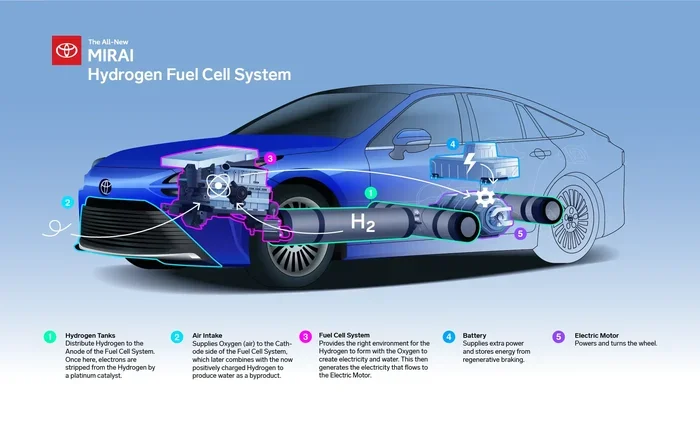
Understanding hydrogen fuel efficiency starts with understanding the technology. A fuel cell electric vehicle uses a stack of cells to create electricity from hydrogen and oxygen. Here is how the process works in simple steps.
First, hydrogen gas is stored in a high-pressure tank on the vehicle. Second, the hydrogen flows into the fuel cell stack. Third, a chemical reaction between the hydrogen and oxygen from the air creates electricity. Fourth, that electricity powers the electric motor that moves the wheels. The only emission is pure water vapor.
The Role of the Hydrogen Tank
The hydrogen tank capacity plays a big role in how far a vehicle can travel. Most hydrogen cars carry about 5 to 6 kilograms of hydrogen. At that amount, a vehicle like the Toyota Mirai can travel around 400 to 500 miles on a single fill. That range is competitive with many gasoline vehicles.
However, the efficiency of the fuel cell also matters. Not all the hydrogen energy converts to motion. Some energy is lost as heat. The better the fuel cell technology, the more of that hydrogen energy gets used to power the car. This is why automakers keep investing in fuel cell technology improvements.
Comparing Hydrogen MPG to Gasoline and Electric Vehicles
How does hydrogen fuel efficiency stack up against other options? Let us look at the numbers side by side. This comparison helps you see where hydrogen fits in the world of alternative fuel vehicles.
| Vehicle Type | Efficiency Rating | Range (Miles) | Emissions |
|---|---|---|---|
| Hydrogen Fuel Cell | 60-70 MPGe | 400-500 | Water vapor only |
| Gasoline Sedan | 30-35 MPG | 400-500 | CO2 and other pollutants |
| Battery Electric | 100-130 MPGe | 250-350 | Zero tailpipe |
| Hybrid Gas-Electric | 40-55 MPG | 500-600 | Low emissions |
As you can see, hydrogen sits in a strong position. It offers better efficiency than gasoline and hybrid vehicles. Battery electric vehicles are more efficient in MPGe terms, but they often have shorter range. Hydrogen gives you the best of both worlds in many cases.
It is also worth noting that hybrid fuel efficiency has improved a lot over the years. If you want to learn more about how Toyota hybrids manage their fuel switching, you can check out our guide on at what speed Toyota hybrid cars switch from battery to gas. It explains how Toyota hybrids balance power sources for optimal efficiency.
Factors That Affect Hydrogen Fuel Economy
Just like gasoline cars, hydrogen fuel economy can vary based on several factors. Your driving habits, road conditions, and even weather all play a role. Here are the main things that impact how efficiently your hydrogen vehicle uses fuel.
Driving Style
Aggressive driving wastes energy in any vehicle. Rapid acceleration and hard braking drain the fuel cell faster. Smooth, steady driving helps you get the most miles out of every kilogram of hydrogen. Think of it like driving a gasoline car. You get better mileage when you ease onto the highway instead of flooring it.
Vehicle Load and Speed
Carrying heavy loads or driving at very high speeds reduces efficiency. The fuel cell has to work harder to maintain speed against wind resistance. Keeping your load light and staying within speed limits helps maximize your hydrogen vehicle range. This is true for all vehicles, not just hydrogen ones.
Temperature and Weather
Cold weather can reduce fuel cell performance. The chemical reactions inside the fuel cell slow down in freezing temperatures. Some hydrogen vehicles have built-in heating systems for the fuel cell stack to counteract this. But in very cold climates, you may notice a slight drop in efficiency.
The Cost of Hydrogen Fuel and Its Impact on MPG
Efficiency means little if the fuel is too expensive. The cost of hydrogen fuel varies widely depending on where you live and how available hydrogen refueling stations are. Let us break down what you need to know about hydrogen fuel cost per mile.
Current Hydrogen Fuel Prices
Hydrogen fuel is typically sold by the kilogram. Right now, prices range from about $10 to $16 per kilogram at public refueling stations. At those prices, filling up a Toyota Mirai costs roughly $70 to $100. But here is the good news. Because the vehicle is so efficient, that fill-up can take you 400 miles or more.
That works out to about $0.17 to $0.25 per mile. Compare that to a gasoline sedan getting 30 MPG at $3.50 per gallon. The gasoline car costs about $0.12 per mile. So hydrogen is currently a bit more expensive per mile. But the gap is closing as green hydrogen production scales up.
Tax Credits and Incentives
Many states and the federal government offer incentives for buying zero emission vehicle models. These credits can significantly reduce the upfront cost of a hydrogen car. Some regions also offer discounted hydrogen fuel or free refueling for a set period. These incentives make hydrogen more affordable for early adopters.
Proper vehicle maintenance also plays a role in keeping costs low. For example, did you know that a dirty cabin filter can affect your vehicles overall performance? Keeping filters clean and systems maintained helps any vehicle run efficiently. You can read more about this in our article on can a dirty cabin filter stop the AC.
Maintenance and Long-Term Ownership of Hydrogen Vehicles
One of the biggest advantages of hydrogen fuel cell vehicles is their low maintenance needs. The fuel cell system has very few moving parts compared to a gasoline engine. This means fewer things can break and less frequent service visits.
What Needs Maintenance?
Hydrogen vehicles still need routine care. Tire rotations, brake checks, and cabin air filter replacements are all part of regular maintenance. The electric motor and fuel cell stack require minimal upkeep. Most owners find that their hydrogen vehicle costs less to maintain over time than a comparable gasoline car.
Speaking of tire rotations, keeping your tires properly maintained is crucial for fuel efficiency in any vehicle. If you want to know more about whether tire rotations are worth the investment, check out our piece on are tire rotations worth the money. It covers how proper tire care boosts fuel economy across all vehicle types.
Hydrogen Tank and Fuel Cell Longevity
The high-pressure hydrogen tanks on modern vehicles are built to last. They are designed to withstand thousands of fill cycles and extreme conditions. The fuel cell stack also has a long lifespan, typically lasting the lifetime of the vehicle. Most manufacturers warranty fuel cells for 8 to 10 years or 100,000 miles.
Another common question is about driving without a key fob. If you own a modern Toyota or are considering one, you might want to learn more about driving a Toyota without the key fob. It covers keyless operation scenarios that apply to many newer vehicles.
The Future of Hydrogen Fuel and MPG Efficiency
The hydrogen fuel economy story is still being written. Technology is improving fast, and infrastructure is expanding. Here is what the future looks like for hydrogen-powered transportation.
Improving Fuel Cell Technology
Automakers are investing billions in fuel cell technology research. New materials and designs are making fuel cells more efficient and less expensive. Future hydrogen vehicles may achieve 80 MPGe or more. That would make them even more competitive with gasoline and battery electric options.
Expanding Hydrogen Infrastructure
One of the biggest challenges for hydrogen vehicles is refueling access. Today, most hydrogen stations are located in California and a few other states. But plans are underway to build more stations across the country. As the network grows, more drivers will consider hydrogen fuel cell vehicles a practical choice.
Green Hydrogen and Sustainability
The environmental benefits of hydrogen depend on how it is produced. Green hydrogen is made using renewable energy sources like wind and solar. This process creates zero carbon emissions. As green hydrogen production scales up, the entire hydrogen vehicle ecosystem becomes cleaner.
Toyota has been a leader in pushing for cleaner fuel options. If you are curious about whether used Toyotas hold their value, we have an article on are used Toyotas worth the price that explores resale value and long-term ownership costs for Toyota vehicles.
Key Takeaways
- Hydrogen fuel efficiency is measured in MPGe, which compares the energy content of hydrogen to gasoline.
- Hydrogen fuel cell vehicles typically achieve around 60-70 MPGe, far exceeding conventional gasoline cars.
- Hydrogen infrastructure is still developing, which affects the real-world convenience and cost of hydrogen fuel.
- Maintenance costs for hydrogen vehicles are generally low due to fewer moving parts compared to combustion engines.
- Green hydrogen production is key to maximizing the environmental benefits of hydrogen fuel.
- Toyota Mirai is a leading example of a hydrogen fuel cell vehicle on the market today.
- Hydrogen fuel cost per mile can be competitive with gasoline when refueling access improves.
Conclusion
The MPG of hydrogen fuel tells an encouraging story about clean transportation. Hydrogen fuel cell vehicles offer impressive efficiency, long range, and zero harmful emissions. With 60 to 70 MPGe, they outperform most gasoline cars and sit competitively among alternative fuel options.
Yes, there are challenges. Refueling stations are still limited, and hydrogen fuel costs more per mile than gasoline right now. But the technology is advancing fast, infrastructure is growing, and green hydrogen production is making the whole picture more sustainable.
If you are exploring alternative fuel vehicles for your next purchase or just want to understand where the auto industry is heading, hydrogen fuel deserves your attention. The hydrogen fuel efficiency numbers speak for themselves. And as fuel cell technology continues to improve, hydrogen vehicles will only become more practical and affordable.
Stay curious about your vehicle and how it works. The more you know about hydrogen MPG and fuel options, the better decisions you can make. The road ahead for clean transportation is bright, and hydrogen is a big part of that journey.
Frequently Asked Questions
What does MPGe mean for hydrogen vehicles?
MPGe stands for miles per gallon equivalent. It measures how far a hydrogen vehicle can travel using the same energy as one gallon of gasoline. Most hydrogen fuel cell vehicles score between 60 and 70 MPGe.
Is hydrogen fuel more efficient than gasoline?
Yes, hydrogen fuel cells convert energy more efficiently than gasoline combustion engines. A hydrogen vehicle uses energy more effectively, which is why it achieves higher MPGe ratings than most gasoline cars.
How far can a hydrogen car travel on a full tank?
Most hydrogen fuel cell vehicles can travel between 400 and 500 miles on a single fill. The exact range depends on the tank size, driving conditions, and fuel cell efficiency.
Is hydrogen fuel expensive compared to gasoline?
Hydrogen fuel currently costs more per mile than gasoline in most areas. However, prices are coming down as production increases and more refueling stations open across the country.
Are hydrogen vehicles good for the environment?
Yes, hydrogen fuel cell vehicles produce only water vapor as a tailpipe emission. When the hydrogen is produced using renewable energy, the entire process is essentially zero-emission.
What is the future of hydrogen fuel efficiency?
Fuel cell technology is improving rapidly. Future hydrogen vehicles may achieve even higher MPGe ratings. As green hydrogen production scales up, the cost and environmental benefits will continue to grow.