Is a Cabin Air Filter Easy to Replace for Beginners
Replacing a cabin air filter is one of the simplest car maintenance tasks you can do at home. Most beginners can complete the job in under 15 minutes with no special tools. This guide covers everything from symptoms of a dirty filter to a full step-by-step replacement walkthrough.
Have you ever noticed your car AC blowing weak air or giving off a strange smell? The problem might be your cabin air filter. Many car owners ignore this small part until it causes bigger issues. The good news is that cabin air filter replacement is one of the easiest maintenance jobs you can do yourself.
Whether you are a complete beginner or someone who has never popped the hood, this guide is for you. We will walk you through everything you need to know. From recognizing the symptoms of a clogged filter to actually swapping it out in your driveway. No mechanic skills required. No expensive shop bills either.
Let us be real for a second. Car maintenance can feel overwhelming. There are thousands of videos, articles, and opinions out there. But the truth is that some tasks are genuinely simple. Replacing your cabin filter is one of them. You will wonder why you did not do it sooner once you see how easy it really is.
Key Takeaways
- Easy DIY Task: Cabin air filter replacement is beginner-friendly and requires minimal tools.
- Quick Process: Most vehicles take 10-20 minutes to complete the swap.
- Signs Matter: Reduced airflow and musty smells are clear indicators your filter needs changing.
- Cost Effective: A new cabin filter costs between $15 and $50, saving you money over shop visits.
- Regular Schedule: Replace your filter every 12,000 to 15,000 miles or once a year.
- No Special Skills Needed: If you can open a glove box, you can replace a cabin air filter.
📑 Table of Contents
- What Is a Cabin Air Filter and Why Does It Matter?
- Signs Your Cabin Air Filter Needs Replacement
- How to Replace a Cabin Air Filter Step by Step
- How Often Should You Replace Your Cabin Air Filter?
- Cabin Air Filter vs Engine Air Filter
- Common Mistakes When Replacing a Cabin Air Filter
- Can You Drive Without a Cabin Air Filter?
- Quick Tips for a Smooth Cabin Filter Replacement
- Final Thoughts
What Is a Cabin Air Filter and Why Does It Matter?
Your car has two main air filters. The engine air filter cleans air going into the engine. The cabin air filter cleans air coming into the passenger cabin. It catches dust, pollen, dirt, and other particles before they reach your lungs. Think of it as a mask for your car’s interior.
Most modern vehicles come equipped with a cabin filter. If you bought your car after 2000, there is a good chance it has one. This filter plays a big role in your air quality inside car. It also supports your HVAC system, which stands for heating, ventilation, and air conditioning. Without a clean filter, your entire airflow system suffers.
How the Cabin Filter Works
When you turn on your fan or AC, air gets pulled through the cabin filter. The filter traps particles like pollen, dust, mold spores, and even tiny debris. Clean air then flows through your vents into the cabin. Over time, all that trapped gunk builds up. The filter gets clogged. Airflow slows down. Your AC works harder. And the air you breathe gets dirtier.
Some filters are made of paper-like material. Others use activated charcoal to absorb odors and fumes. The charcoal type is great if you live in a polluted area or drive through heavy traffic often. Both types serve the same core purpose. They keep the air inside your car clean and fresh.
Signs Your Cabin Air Filter Needs Replacement
Your car will tell you when something is wrong. You just need to know what to look for. Catching these signs early can save you from bigger problems down the road. Here are the most common symptoms of a dirty cabin filter.
Reduced Airflow From Vents
This is the number one sign. If you notice your vents are pushing out weak air, the filter might be blocked. A clogged filter restricts airflow. You may turn the fan to maximum and still feel barely anything. This is especially noticeable when you need strong AC on a hot day. A dirty cabin filter is often the hidden cause behind weak vent performance.
Unusual Smells Coming From Vents
Do you smell something musty or dusty when you turn on the AC? That is a red flag. A dirty filter can grow mold or trap organic matter that starts to smell bad. This odor gets pushed through your vents every time you run the fan. It is not just unpleasant. It can affect your health too, especially if you have allergies or asthma.
Increased Allergies Inside the Car
If you or your passengers start sneezing more than usual inside the car, check your cabin filter. A worn-out filter cannot trap pollen and dust effectively. Allergens pass through and circulate inside the cabin. This is especially important during spring and fall when pollen counts are high.
Noisy Fan or Blower Motor
When airflow is restricted, your blower motor works harder. You might hear whistling, rattling, or straining sounds from the vents. Over time, this extra strain can wear out the motor. Replacing a cheap filter is way easier and cheaper than replacing a blower motor.
If you are experiencing any of these symptoms, it is worth checking your cabin filter. You can also read more about what happens when a cabin filter gets too dirty in our article on can a dirty cabin filter stop the AC.
How to Replace a Cabin Air Filter Step by Step
Here is the part you have been waiting for. Actually doing the replacement. The process is straightforward for most vehicles. Let us break it down into simple steps.
Step 1: Gather Your Tools and Materials
You will need very little to do this job. Here is your checklist:
- New cabin air filter (check your owner manual for the correct part number)
- Flathead screwdriver or trim removal tool
- Flashlight (helpful but not required)
- Clean cloth or paper towels
- Gloves (optional but recommended)
You can buy a cabin filter at any auto parts store or online. They usually cost between $15 and $50. That is a fraction of what a shop would charge you for the same job.
Step 2: Find the Cabin Filter Location
In most cars, the cabin filter sits behind the glove box. Some vehicles have it under the dashboard on the passenger side. Others place it in the engine bay near the windshield. Check your owner manual to find the exact location for your vehicle.
For the most common setup behind the glove box, you will need to remove the glove box first. It usually has stops or clips that let it swing open or drop down.
Step 3: Remove the Old Filter
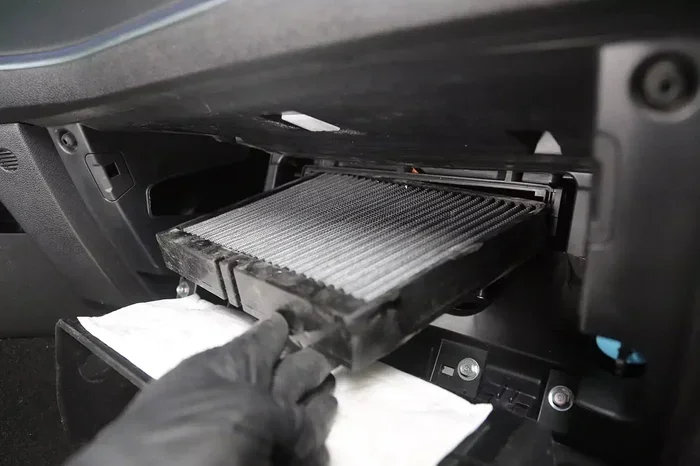
Once you have access to the filter housing, open the cover. It may have clips, screws, or a simple latch. Carefully pull out the old filter. Pay attention to which direction the airflow arrow is pointing. The arrow should face toward the HVAC unit, usually toward the engine or downward. Note this direction before you remove the old filter so you know how to install the new one.
Take a moment to look at the old filter. If it looks dark gray, black, or clogged with debris, you definitely needed to replace it. This is a good visual confirmation that your cabin filter symptoms were real.
Step 4: Install the New Filter
Unbox your new filter and compare it to the old one. They should be the same size. Make sure the airflow arrow on the new filter matches the direction of the old one. Slide the new filter into the housing carefully. Do not force it. It should fit snugly but without bending or folding.
Wipe out any dust or debris inside the housing with your clean cloth. This small step helps keep the area clean and prevents particles from entering your HVAC system.
Step 5: Reassemble and Test
Put the filter cover back on and secure all clips or screws. Reinstall the glove box if you removed it. Make sure everything clicks or snaps back into place. Start your car and turn on the fan. Check all vents for strong, even airflow. Smell the air coming out. It should be clean and fresh. If something does not feel right, double-check that the filter is seated properly and the cover is secure.
That is it. You just replaced your cabin air filter. Most people complete this in 10 to 20 minutes. It is genuinely one of the easiest DIY car repair jobs out there.
How Often Should You Replace Your Cabin Air Filter?
Your owner manual is the best source for this. Most manufacturers recommend replacing the cabin filter every 12,000 to 15,000 miles or once a year. However, your driving conditions can change this timeline.
Factors That Affect Replacement Frequency
Several things can cause your cabin filter to wear out faster. Here are the main factors to consider:
- Driving in dusty or rural areas: More dirt and debris means faster clogging.
- High pollen seasons: Spring and fall can fill up your filter quicker.
- City driving with heavy traffic: Exhaust fumes and pollution build up faster.
- Frequent AC use: Running your AC constantly pulls more air through the filter.
- Pets in the car: Pet hair and dander add extra load to the filter.
If you drive in any of these conditions, consider checking your filter every 6,000 miles. A quick visual inspection takes just a minute and can tell you a lot. If the filter looks dirty when you hold it up to a light, go ahead and replace it. Being proactive with your maintenance schedule keeps your car running well and your air clean.
Cabin Air Filter vs Engine Air Filter
These two filters often get confused. They serve different purposes and sit in different locations. Understanding the difference helps you maintain both correctly.
| Feature | Cabin Air Filter | Engine Air Filter |
|---|---|---|
| Location | Inside the cabin, usually behind glove box | In the engine bay, near the air intake |
| Purpose | Cleans air for passengers | Cleans air for the engine |
| Replacement Interval | Every 12,000-15,000 miles | Every 15,000-30,000 miles |
| DIY Difficulty | Very easy | Easy to moderate |
| Cost | $15-$50 | $10-$40 |
| Effect On | Air quality and comfort | Engine performance and fuel economy |
While both filters are important, the cabin air filter directly affects your daily driving comfort. A dirty engine filter can hurt fuel economy and performance. A dirty cabin filter affects the air you breathe. Both should be part of your regular car maintenance routine.
Common Mistakes When Replacing a Cabin Air Filter
Even easy tasks can go wrong if you are not careful. Here are the most common mistakes beginners make when replacing their cabin air filter.
Installing the Filter Backward
Every cabin filter has an airflow direction arrow. If you install it backward, airflow gets restricted instead of improved. This defeats the entire purpose. Always match the arrow direction to the airflow path in your vehicle. Take a photo of the old filter before removing it if you are unsure.
Using the Wrong Filter Size
Not all cabin filters are the same. Even similar car models can use different filter sizes across model years. Always verify the part number using your owner manual or the old filter before purchasing a replacement. A filter that is too small will not seal properly. A filter that is too big may not fit at all.
Forgetting to Clean the Housing
When you remove the old filter, debris and dust often fall into the housing. If you just drop the new filter in without cleaning, that debris gets pulled into your vents. A quick wipe down takes a few seconds and makes a big difference in air quality.
Skipping Regular Replacements
The biggest mistake is simply forgetting to do it at all. A cabin filter does not last forever. It gets dirty over time and loses its effectiveness. Skipping replacements leads to poor air quality, reduced AC performance, and potential mold growth inside your HVAC system. Set a reminder on your phone or calendar every 12 months. It is an easy way to stay on top of your cabin filter replacement schedule.
Can You Drive Without a Cabin Air Filter?
Technically, yes. Your car will still run and you can still drive it. But should you? Absolutely not. Driving without a cabin filter means all dust, pollen, and debris flows directly into your cabin. Over time, this can damage your HVAC system and affect your health. If you need more details on this topic, check out our article about can you drive without a cabin air filter.
Some people wonder if they can run their AC without a cabin air filter temporarily. While the AC will still blow cold air, it will also blow unfiltered air into your car. This is not a long-term solution. Always replace a missing or damaged filter as soon as possible.
Quick Tips for a Smooth Cabin Filter Replacement
Here are some bonus tips to make the process even easier and more effective:
- Buy your filter in advance. Do not wait until your current filter is completely clogged. Order a replacement before you need it.
- Do it in daylight. Working in a well-lit area makes it much easier to see inside the cabin and engine bay.
- Keep your owner manual handy. It will tell you exactly where your filter is and what type your car uses.
- Take photos during disassembly. This helps you remember how everything fits back together.
- Check the filter monthly. A quick glance during your gas station visits keeps you aware of filter condition.
- Dispose of the old filter properly. Old filters contain trapped dirt and debris. Seal them in a bag before throwing them away.
Final Thoughts
So, is a cabin air filter easy to replace? The answer is a clear and definitive yes. This is one of the most beginner-friendly maintenance tasks you can tackle. It costs very little, takes less than 20 minutes, and requires no special skills or tools. You do not need to visit a mechanic or spend hundreds of dollars at a shop.
Regularly replacing your cabin filter improves the air you breathe inside your car. It keeps your AC system running strong. It reduces allergens and unpleasant odors. And it protects your HVAC system from unnecessary wear and tear. All of this from a simple part swap that anyone can learn to do.
If you have been putting it off, now is the perfect time to try it. Grab a new filter, find a comfortable spot in your driveway, and follow the steps in this guide. You will feel accomplished once you are done. And your car will thank you with cleaner, fresher air every time you drive.
Taking care of your vehicle does not have to be complicated. Small maintenance tasks like this add up to big savings and a better driving experience. Your cabin air filter is one of those hidden gems that makes a real difference when you keep it fresh. Do not wait for problems to appear. Stay proactive, stay informed, and keep your car running its best.
Frequently Asked Questions
How do I know if my cabin air filter needs replacing?
Watch for reduced airflow from your vents, musty or dusty smells when the AC is on, increased allergies inside the car, or unusual noises from the blower motor. If you notice any of these cabin filter symptoms, it is time to inspect and likely replace your filter.
Can I replace my cabin air filter myself?
Absolutely. Most vehicles make the cabin filter accessible without any special tools. If you can open your glove box and remove a few clips, you can handle this replacement. It is one of the simplest DIY car repair tasks available.
How much does a cabin air filter cost?
A standard cabin air filter costs between $15 and $50. You can buy one at any auto parts store or online. Considering what a shop would charge for the same job, doing it yourself saves you a significant amount of money.
What happens if I never replace my cabin air filter?
Over time, the filter becomes clogged with dust, pollen, and debris. This leads to reduced airflow, weaker AC performance, musty odors, and potential mold growth. Your HVAC system also has to work harder, which can lead to premature wear on the blower motor and other components.
Is a cabin air filter the same as an engine air filter?
No, they are different. The cabin air filter cleans the air that enters the passenger cabin. The engine air filter cleans the air that enters the engine for combustion. They serve different purposes and are located in different parts of the vehicle.
How often should I check my cabin air filter?
It is a good habit to check your cabin air filter every 6,000 miles or at least twice a year. If you drive in dusty conditions, have pets, or suffer from allergies, you may want to check it even more frequently. A quick visual inspection can tell you if it needs replacing.