How Long to Leave the Engine Before Checking the Oil
You should wait 5 to 10 minutes after turning off your engine before checking the oil. This gives the oil time to drain back into the oil pan so you get an accurate reading on the dipstick. Checking oil when the engine is too hot or too cold can lead to wrong measurements and potential engine damage.
Have you ever popped the hood of your car and wondered whether you should wait before checking your oil? Maybe you just got home from a long drive and your instinct says, “Check it now.” Or maybe you’ve heard conflicting advice from friends and online forums. The truth is, how long to leave the engine before checking the oil matters more than most people realize.
Getting this simple step right can save you from inaccurate readings, unnecessary trips to the shop, and even serious engine problems down the road. In this guide, we’ll walk through everything you need to know. We’ll cover the right timing, the best method, and common mistakes that trip up even experienced car owners. By the end, you’ll feel confident every time you check your engine oil level.
Let’s be honest. Checking your oil sounds easy. Pull the dipstick, wipe it, reinsert it, pull it out again, and read the marks. But there’s a whole science behind when and how you do it. The temperature of your engine, the type of oil you use, and even the surface you park on all play a role. So let’s break it all down.
Key Takeaways
- Wait 5–10 minutes: Let the engine cool slightly so the oil settles into the pan for an accurate reading.
- Check on a level surface: Parking on flat ground ensures the dipstick gives a true measurement.
- Warm the engine first: Running the engine for 2–3 minutes warms the oil, helping it flow smoothly off the dipstick.
- Never check while hot: Scalding oil can cause burns and give false readings.
- Know your oil type: Synthetic and conventional oils behave differently when cooling.
- Check regularly: Monthly oil checks prevent low oil situations that harm your engine.
- Follow manufacturer guidelines: Your owner’s manual has the best advice for your specific vehicle.
📑 Table of Contents
- Why Timing Matters When Checking Your Oil
- How Long to Leave the Engine Before Checking the Oil
- Step-by-Step Guide to Checking Your Engine Oil
- Common Mistakes People Make When Checking Oil
- How Often Should You Check Your Oil?
- What Your Oil Level Tells You About Engine Health
- Expert Tips for Better Oil Maintenance
- Frequently Asked Questions
- Final Thoughts
Why Timing Matters When Checking Your Oil
The reason timing matters comes down to physics. When your engine is running, oil circulates through every moving part. It lubricates the crankshaft, pistons, camshaft, and bearings. As the engine heats up, the oil becomes thinner and flows more freely. This is actually good for lubrication but bad for getting an accurate dipstick reading.
When you shut off the engine, the oil starts to cool and thicken. It slowly drains back down into the oil pan. If you check the oil too soon, some of it is still clinging to the engine block, the turbocharger (if you have one), and the oil passages. This means the dipstick will show a lower level than what’s actually in the pan.
On the flip side, waiting too long isn’t ideal either. Oil that has cooled completely can become quite thick, especially in cold weather. This thick oil may not coat the dipstick evenly, which can also give you a misleading reading. So there’s a sweet spot, and we’ll get to it in just a moment.
The Science Behind Oil Settling
Your engine oil does more than just lubricate. It also cleans, cools, and seals. As the engine runs, tiny metal particles, dust, and combustion byproducts mix into the oil. The oil filter catches most of these contaminants, but some remain suspended. When the engine stops, these particles gradually settle to the bottom of the oil pan.
For the most accurate reading, you want the oil to be in a resting state. This means it has settled, it has returned to the pan, and it has reached a near-stable temperature. This is why most car manufacturers recommend waiting a few minutes after shutdown. The oil check process isn’t just about reading a stick. It’s about reading the stick at the right moment.
How Long to Leave the Engine Before Checking the Oil
The short answer: wait between 5 and 10 minutes after turning off your engine. This window gives the oil enough time to drain back into the pan without cooling down too much. But the exact timing depends on a few factors.
Here’s a simple breakdown to help you decide:
- After a short drive (5–10 minutes): Wait about 5 minutes before checking.
- After a long highway drive (30+ minutes): Wait 8 to 10 minutes.
- After the engine has been sitting overnight: You can check it right away, but the reading may be slightly low because cold oil is thicker.
The goal is to check the oil when it’s warm enough to flow freely but cool enough that it has settled. Think of it like checking the water level in a bathtub. If the faucet is still running, the water is splashing around and the level looks wrong. But if you wait a few seconds, the water calms down and you get a true reading. The same principle applies to your engine oil.
Does Engine Temperature Affect the Reading?
Absolutely. Engine temperature has a direct impact on oil viscosity. Viscosity is just a fancy word for how thick or thin your oil is. Hot oil is thin and flows easily. Cold oil is thick and moves slowly.
Most manufacturers recommend checking your oil when the engine is warm but not hot. This is often called the “warm idle” state. You’ve warmed the oil up enough for it to flow off the dipstick cleanly, but you haven’t risked burning yourself on scalding engine parts. This is why many experts suggest running the engine for 2 to 3 minutes, turning it off, and then waiting 5 to 10 minutes.
If you check the oil when the engine is cold, especially in winter, the reading might be a quarter quart or so lower than it actually is. That’s because the thick, cold oil hasn’t fully drained from the engine’s upper components. Over time, consistently checking oil when cold can give you a false sense of security about your oil level indicator readings.
Step-by-Step Guide to Checking Your Engine Oil
Now that you know the right timing, let’s walk through the actual process. Following these steps ensures you get the most accurate reading every single time.
Step 1: Park on a Level Surface
This step is more important than most people think. If your car is parked on a slope or uneven ground, the oil pools to one side of the oil pan. When you pull the dipstick, it reads the oil level from wherever it happens to be at that moment. This can give you a reading that’s too high or too low.
Find a flat, solid surface. A driveway or a garage floor works perfectly. If you’re at a gas station on a slight incline, try to park as straight as possible. It’s a small detail that makes a big difference in your engine oil check accuracy.
Step 2: Warm Up the Engine Briefly
Start your engine and let it idle for about 2 to 3 minutes. This warms the oil up so it flows easily. You don’t need to rev the engine or drive anywhere. Just let it sit and run. The oil temperature should be somewhere between 195°F and 220°F for the best results.
Once the engine has warmed up, turn it off. Now here’s the critical part: do not open the hood immediately. Walk away and give the oil time to settle. Count slowly to 300 in your head, or set a timer on your phone for 5 to 10 minutes.
Step 3: Locate the Dipstick
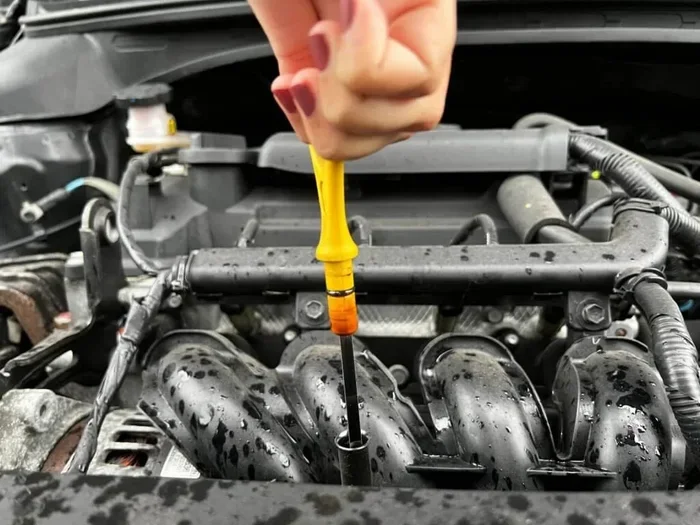
Open the hood and find the dipstick. On most vehicles, it has a brightly colored handle, often yellow or orange, so it’s easy to spot. Pull it out slowly and carefully. Be mindful of the surrounding engine components. You don’t want to accidentally pull on a wire or hose.
Step 4: Wipe and Reinsert
Take a clean rag or paper towel and wipe the dipstick completely clean. This removes any oil clinging to the stick from your last check. Once it’s clean, reinsert the dipstick all the way back into its tube. Push it in fully so the tip sits snugly in the oil.
Step 5: Pull It Out and Read
Pull the dipstick out again and hold it horizontally. Look at both sides of the stick. The oil will leave a mark on the graduated section. You’re looking for the level to fall between the “Full” mark and the “Add” mark. Some dipsticks have crosshatched areas, while others have two small holes or lines.
If the oil level is between the marks, you’re good. If it’s below the “Add” line, you need to add more oil. If it’s above the “Full” line, you have too much oil, which can cause its own set of problems. Can I add oil to my car if it’s low? Yes, absolutely. Just make sure you use the right type of oil for your vehicle.
Common Mistakes People Make When Checking Oil
Even though checking oil seems straightforward, plenty of people make mistakes that throw off their readings. Let’s talk about the most common ones so you can avoid them.
Checking the Oil Right After Driving
This is the number one mistake. You pull into the driveway, shut off the engine, and immediately pop the hood to check the oil. The problem is that hot, circulating oil hasn’t settled yet. The dipstick will read lower than the actual level because oil is still distributed throughout the engine.
Give yourself a few minutes. Use that time to grab a drink of water or check your mirrors. Patience pays off when it comes to accurate oil readings. Rushing this step is one of the most common car maintenance tips people ignore.
Not Checking on a Level Surface
We mentioned this above, but it deserves a second mention. Parking on an incline can throw off your reading by as much as a quarter quart. That’s enough to make you think you’re low when you’re actually fine, or vice versa.
If you don’t have access to a flat surface, at least park as level as you can and wait a few extra minutes for the oil to settle. This helps compensate for the slight angle.
Overfilling the Oil
Some people add too much oil because they think more is better. It’s not. Overfilling can cause the oil to foam, which reduces its lubricating ability. It can also increase pressure inside the crankcase, potentially leading to oil leaks or even damage to the crankshaft.
If you accidentally overfill, you’ll need to drain some oil out. This is where knowing your vehicle’s oil capacity comes in handy. Always add oil in small increments and recheck the level each time.
Using the Wrong Oil Type
Not all oils are created equal. Conventional oil, synthetic blend oil, and full synthetic oil all have different properties. Using the wrong type can affect your reading and, more importantly, your engine’s performance.
Check your owner’s manual for the recommended oil weight and type. If you’re unsure, a quick visit to Jiffy Lube or your local service center can help you get it right. And if you’re worried about cost, you can often negotiate the price of an oil change at many service centers.
How Often Should You Check Your Oil?
The old rule of thumb was to check your oil every time you fill up the gas tank. That advice still holds up for many vehicles, especially older ones. Newer cars with electronic oil level indicators may not need to be checked as often, but it’s still a good habit to get into.
Here’s a simple schedule you can follow:
- Monthly checks: For most vehicles, checking once a month is sufficient.
- Before long trips: Always check your oil before a road trip or long drive.
- After an oil change: Recheck the oil level after 500 miles to make sure everything is in order.
- Seasonal changes: Oil behavior changes with temperature. Check more frequently during extreme heat or cold.
Regular checks help you catch problems early. Low oil is one of the leading causes of engine damage. And did you know that can low oil cause engine overheating? Yes, it absolutely can. Oil reduces friction, and without enough of it, metal parts grind together, creating excessive heat. This can lead to catastrophic engine failure if left unchecked.
What Your Oil Level Tells You About Engine Health
Your oil level isn’t just a number on a dipstick. It’s a window into the overall health of your engine. By paying attention to the color, consistency, and level of your oil, you can catch potential problems early.
Color Clues
Fresh oil is amber or golden in color. As it ages, it darkens to brown and eventually black. If your oil is black, it’s time for a change. If it looks milky or frothy, that could indicate a coolant leak, which is a serious problem that needs immediate attention.
Consistency Clues
Healthy oil feels smooth and slippery between your fingers. If it feels gritty or rough, it has too many contaminants and needs to be replaced. Gritty oil doesn’t lubricate properly, which increases wear on engine components.
Level Clues
If you notice your oil level dropping faster than normal, something might be wrong. Possible causes include oil leaks, burning oil, or a faulty oil filter. In these cases, it’s wise to visit a mechanic sooner rather than later. Ignoring a dropping oil level can lead to low oil symptoms like engine knocking, reduced performance, and overheating.
Also, if you’re a Toyota owner wondering about service options, you can get your Lexus oil change done at Toyota as well. And if you’re wondering about free oil changes at Toyota, many dealerships offer them as part of maintenance packages.
Expert Tips for Better Oil Maintenance
Beyond just checking your oil level, there are several best practices that will keep your engine running strong for years to come.
Keep a Maintenance Log
Write down every oil change and oil check. Note the date, the mileage, the type of oil used, and the reading on the dipstick. This log becomes invaluable over time. It helps you spot trends, like a slowly dropping oil level that might indicate a small leak.
Set Reminders
Use your phone to set monthly reminders for oil checks. It’s easy to forget about this task when life gets busy. A simple calendar alert can save you from a costly repair later on.
Don’t Skip Oil Changes
Checking your oil is great, but it’s not a substitute for regular oil changes. Over time, oil breaks down and loses its effectiveness. Follow the manufacturer’s recommended oil change interval to keep your engine properly lubricated.
Invest in Quality Oil and Filters
Cheap oil and low-quality filters may save you a few dollars upfront, but they can cost you much more in the long run. Quality oil maintains its viscosity better and keeps your engine cleaner. A good oil filter catches more contaminants and lasts longer.
Frequently Asked Questions
Can I check my oil when the engine is cold?
Yes, you can check your oil when the engine is cold, but the reading may not be as accurate. Cold oil is thicker and doesn’t flow off the dipstick as easily. For the most precise reading, warm the engine for 2 to 3 minutes, turn it off, and wait 5 to 10 minutes before checking.
How do I know if my engine has too much oil?
If the oil level on your dipstick reads above the “Full” mark, you have too much oil. Symptoms of overfilling include oil leaks, a burning smell, blue smoke from the exhaust, and unusual engine noises. If you suspect overfilling, have the excess oil drained by a professional.
What happens if I drive with low oil?
Driving with low oil is dangerous. Insufficient lubrication causes increased friction between engine parts, leading to overheating, excessive wear, and potentially catastrophic engine failure. If your oil is low, add the correct type of oil immediately and address any underlying causes of the low level.
Does synthetic oil need to be checked differently?
No, the process for checking synthetic oil is the same as checking conventional oil. However, synthetic oil tends to maintain its viscosity better over time, so you may notice fewer fluctuations in your readings. Always refer to your owner’s manual for specific guidance on oil type and checking intervals.
How can I tell if my oil needs to be changed?
Look at the color and consistency of the oil on the dipstick. If it’s dark black and feels gritty, it’s time for a change. Most manufacturers recommend changing oil every 5,000 to 7,500 miles for conventional oil and every 7,500 to 10,000 miles for synthetic oil. You can also check your dashboard for oil change reminder lights.
Can I just drive to a quick-lube shop to check and change my oil?
Absolutely. Quick-lube shops like Jiffy Lube offer convenient oil change services and can check your oil level as part of the process. Just make sure you know what type of oil your vehicle requires beforehand, and don’t hesitate to ask questions about their service.
Final Thoughts
Knowing how long to leave the engine before checking the oil is one of the simplest yet most impactful things you can do for your vehicle. Wait 5 to 10 minutes after turning off the engine. Park on a level surface. Warm the engine briefly before checking. And never rush the process.
These small habits add up over time. They help you catch low oil levels early, avoid engine damage, and keep your car running smoothly for years to come. Checking your oil takes less than five minutes once you get the hang of it. And that five minutes could save you thousands of dollars in engine repairs.
So the next time you pull into the driveway, don’t just hop out and run inside. Take that extra few minutes. Pop the hood, check your oil, and give yourself peace of mind. Your engine will thank you for it.