Car AC Gas Pressure Explained How to Check and Fix
Car AC gas pressure is the key to keeping your vehicle cool in summer. This guide shows you how to check AC pressure, read the gauges, and fix common problems like low or high pressure. You will learn what normal readings look like, which tools you need, and when to call a pro.
Your car air conditioning system works hard to keep you cool on hot days. But like any system, it can run into trouble. One of the most common issues is car AC gas pressure that falls outside the normal range. Whether your AC blows warm air or makes strange noises, pressure problems are often the root cause.
In this guide, we will walk you through everything you need to know about AC gas pressure. You will learn what normal readings look like, how to check them yourself, and what to do when something goes wrong. We will also cover the most common mistakes people make and share expert tips that save time and money. By the end, you will feel confident tackling AC pressure issues on your own.
Key Takeaways
- Know Your Numbers: Normal low-side pressure is typically 25-45 PSI, and normal high-side pressure is 150-250 PSI at idle.
- Use the Right Tools: A quality AC manifold gauge set and a thermometer are essential for accurate readings.
- Low Pressure Often Means a Leak: Most low AC pressure issues are caused by refrigerant leaks that need to be found and sealed.
- High Pressure Can Be Dangerous: High readings may point to a blocked condenser, overcharge, or a failing compressor.
- Safety Comes First: Never open AC lines when the engine is running, and wear protective gear when handling refrigerant.
- DIY Is Possible: Many AC pressure problems can be fixed at home with basic tools and a little know-how.
- Know When to Call a Pro: If you cannot find the leak or the system still fails after recharging, seek professional help.
📑 Table of Contents
- What Is Car AC Gas Pressure and Why It Matters
- Understanding Normal AC Pressure Ranges
- How to Check Your AC Gas Pressure Step by Step
- Common AC Pressure Problems and What They Mean
- How to Fix Low and High AC Pressure Issues
- When to Call a Professional for AC Pressure Issues
- Preventing AC Pressure Problems Before They Start
- Final Thoughts on Car AC Gas Pressure
What Is Car AC Gas Pressure and Why It Matters
Your car AC system uses a special gas called refrigerant to cool the air inside your cabin. This refrigerant moves through a closed loop of tubes, compressors, and valves. As it travels, it changes from a low-pressure gas to a high-pressure liquid and back again. This cycle is what creates the cold air you feel from your vents.
Car AC gas pressure refers to the force that the refrigerant puts on the walls of the AC lines. Think of it like water pressure in a garden hose. If the pressure is too low, the system cannot cool properly. If the pressure is too high, it can damage expensive parts like the AC compressor or the condenser.
There are two main pressure readings you need to know:
- Low-side pressure: This is the pressure on the suction side of the system, between the evaporator and the compressor.
- High-side pressure: This is the pressure on the discharge side, between the compressor and the condenser.
Both readings matter. A trained eye can read these two numbers and tell you exactly what is wrong with your AC system. That is why learning to check AC gas pressure is one of the most useful skills a car owner can have.
Why AC Pressure Changes With Temperature
It is important to understand that AC pressure changes with outside temperature. On a hot summer day, your high-side pressure will naturally be higher than on a cool spring morning. This is normal. When you check your readings, always compare them to the AC pressure chart for the current outside temperature. A reading that looks high on a cool day might be perfectly fine on a hot day.
Understanding Normal AC Pressure Ranges
Now that you know what car AC gas pressure is, let us talk about what normal looks like. Normal readings depend on several factors, including your car model, the type of refrigerant used, and the outside temperature.
Low-Side Pressure: What Is Normal
The low-side pressure is the suction pressure. For most cars using R134a refrigerant, the normal low-side reading at idle is between 25 and 45 PSI. If your car uses R1234yf refrigerant, the range may be slightly different. Always check your owner manual for the exact specs.
Here are some quick guidelines for low-side pressure:
- 25-45 PSI: This is the normal range at idle on a warm day.
- Below 20 PSI: This usually means low refrigerant or a leak.
- Above 50 PSI: This could indicate a blockage or overcharge.
High-Side Pressure: What Is Normal
The high-side pressure is the discharge pressure. For most systems using R134a refrigerant, normal high-side pressure at idle ranges from 150 to 250 PSI. On very hot days, it may go up to 275 PSI, which is still within a safe range.
Here are some quick guidelines for high-side pressure:
- 150-250 PSI: Normal range at idle on a warm day.
- Below 130 PSI: This could mean low refrigerant or a weak compressor.
- Above 300 PSI: This is a red flag and needs immediate attention.
AC Pressure Chart: Your Best Friend
An AC pressure chart is a table that shows you the expected pressure readings at different outside temperatures. You can find these charts online or in repair manuals. When you take your readings, compare them against the chart to see if they fall within the normal range. This simple step can save you a lot of guesswork.
How to Check Your AC Gas Pressure Step by Step
Checking car AC gas pressure is not as hard as it sounds. With the right tools and a little patience, you can do it yourself in about 15 minutes. Here is exactly how to do it.
What You Will Need
Before you start, gather these tools:
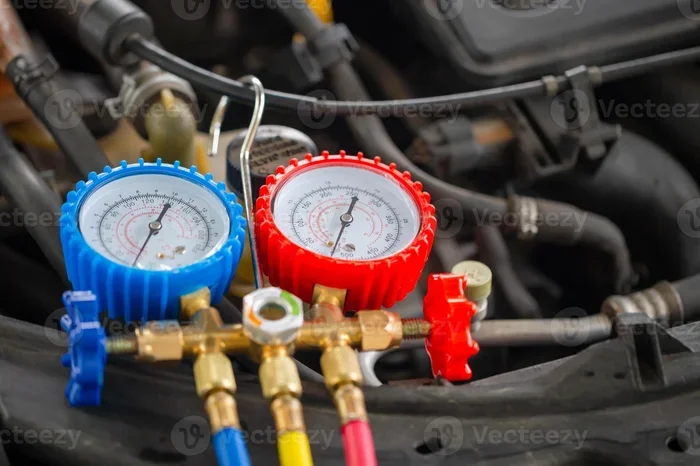
- AC manifold gauge set: This has two gauges, one for low-side and one for high-side pressure.
- Thermometer: A digital thermometer helps you measure the temperature at the service ports.
- Refrigerant identifier: This tool checks that you have the right type of refrigerant in your system.
- Safety glasses and gloves: Refrigerant can cause frostbite and eye damage.
Step 1: Find the Service Ports
Open the hood of your car. Look for the AC service ports on the AC lines. The low-side port is usually on the larger line, near the evaporator. The high-side port is on the smaller line, near the compressor. They often have colored caps — blue for low-side and red for high-side.
Step 2: Connect the Gauges
Attach the hoses from your AC manifold gauge set to the service ports. The blue hose goes to the low-side port, and the red hose goes to the high-side port. The yellow hose connects to a refrigerant tank if you plan to recharge the system.
Make sure the connections are tight. Loose connections will give you false readings and can leak refrigerant.
Step 3: Start the Engine and Turn on the AC
Start the engine and set the AC to maximum cold. Let the engine idle for about 5 to 10 minutes. This allows the AC compressor to engage and the system to reach a steady state. Watch the gauges and note the readings.
Step 4: Read and Compare the Pressures
Look at both gauges. Compare your readings to the AC pressure chart for the current outside temperature. If both readings are in the normal range, your system is healthy. If one or both readings are off, you have a problem to investigate.
Quick Tip: Always Check the Temperature
The temperature of the air coming from your vents matters too. If the AC is blowing warm air but the pressures look normal, the problem might be a clogged AC evaporator or a broken blend door actuator. Pressure readings alone do not tell the whole story.
Common AC Pressure Problems and What They Mean
Once you know how to read your gauges, you can start diagnosing problems. Here are the most common AC pressure issues and what they tell you about your system.
Low Pressure on Both Sides
If both the low-side and high-side pressures are below normal, the most likely cause is low refrigerant level. This usually means you have a leak somewhere in the AC lines. Common leak points include the compressor shaft seal, the hose connections, and the AC condenser.
Signs of low refrigerant include:
- AC blows warm or only slightly cool air.
- The AC clutch cycles on and off frequently.
- You see oily residue around AC fittings.
- The system takes a long time to cool down.
Low Pressure on the Low Side, High Pressure on the High Side
This pattern can indicate a blockage in the system. A common culprit is a clogged thermal expansion valve or a blocked AC accumulator. When the refrigerant cannot flow freely, pressure builds up on the high side and drops on the low side.
High Pressure on Both Sides
If both readings are too high, you may have overcharged the system with too much refrigerant. Other causes include a malfunctioning AC condenser fan, a clogged condenser, or debris blocking airflow through the condenser fins.
Normal Low Side, High High-Side Pressure
This is a tricky one. The low-side pressure looks fine, but the high-side is too high. This often points to a problem with the AC compressor itself. A worn compressor may not be pumping efficiently, causing pressure to build up on the discharge side. It can also mean the condenser is not working properly.
Comparison Table: Normal vs Abnormal AC Pressure Readings
| Condition | Low-Side PSI | High-Side PSI | Likely Cause |
|---|---|---|---|
| Normal | 25-45 | 150-250 | System working properly |
| Low Refrigerant | Below 20 | Below 150 | Refrigerant leak |
| Blocked Expansion Valve | Below 20 | Above 300 | Flow restriction |
| Overcharged System | Above 50 | Above 300 | Too much refrigerant |
| Failing Compressor | Normal | Above 300 | Compressor wear |
| Condenser Fan Failure | Normal | Above 300 | No airflow through condenser |
How to Fix Low and High AC Pressure Issues
Now that you can read the gauges and identify the problem, let us talk about fixing it. The fix depends on what is causing the AC gas pressure issue.
Fixing Low AC Pressure
If your low-side pressure is too low, start by checking for leaks. You can use a UV leak detection dye or an electronic leak detector. Add the dye to the system and run the AC for a few minutes. Then use a UV light to inspect all the AC lines and fittings. The dye will glow at the leak point, making it easy to find.
Common fixes for low pressure include:
- Replacing a worn O-ring: This is a cheap and easy fix that solves many leaks.
- Repairing a cracked hose: Replace the damaged hose and refill the system.
- Recharging the system: After fixing the leak, add the correct amount of refrigerant using a recharge kit.
- Replacing the compressor: If the compressor shaft seal is leaking, you may need a new compressor.
Expert Insight: Always evacuate the system fully before recharging. Trapped moisture and air inside the AC lines can cause corrosion and reduce cooling performance. Use a proper vacuum pump to pull a deep vacuum before adding fresh refrigerant.
Fixing High AC Pressure
High pressure issues need a different approach. Start by checking the condenser for blockages or damage. Clean any dirt or debris from the condenser fins using a soft brush or compressed air. Make sure the AC condenser fan is working properly. A broken fan will cause high pressure because there is not enough airflow to cool the refrigerant.
If the condenser fan is working and the condenser is clean, check the refrigerant level. An overcharged system will show high pressure on both sides. You may need to have a professional recover the excess refrigerant and recharge to the correct level.
Quick Tips for Fixing AC Pressure Problems
- Never mix different types of refrigerant. R134a and R1234yf are not interchangeable.
- Always replace the receiver drier when you open the system for repairs.
- Use a quality AC manifold gauge set for accurate readings.
- Check the cabin air filter. A clogged filter can restrict airflow and mimic AC pressure problems.
- Run the AC for at least 10 minutes after recharging to let the system stabilize.
Common Mistakes People Make When Checking AC Pressure
Even experienced DIYers make mistakes when checking car AC gas pressure. Here are the most common ones to avoid:
- Reading gauges with the engine off: The compressor must be running for accurate readings. Always check pressure with the engine at idle and the AC on maximum cold.
- Ignoring outside temperature: A pressure reading that looks wrong on paper may be perfectly normal for the current temperature. Always use the AC pressure chart.
- Overcharging the system: Adding too much refrigerant is just as bad as having too little. It can damage the compressor and reduce cooling.
- Skipping the leak check: If you just recharge without finding the leak, the refrigerant will escape again, and you will be right back where you started.
- Using the wrong refrigerant: Always verify which type of refrigerant your car uses before adding any.
When to Call a Professional for AC Pressure Issues
Many AC gas pressure problems can be fixed at home. But some situations call for a professional mechanic. Here is when you should seek expert help:
- You cannot find the leak: Some leaks are very small and hard to detect without professional equipment like a smoke machine.
- The compressor is not engaging: This could be an electrical issue that requires diagnostic tools.
- Pressure readings are erratic: If the gauges are bouncing around, there may be moisture or air trapped in the system.
- You need to recover old refrigerant: In many places, it is illegal to release refrigerant into the air. A licensed shop has the proper recovery equipment.
- You have tried everything and the AC still does not work: There may be an internal issue with the AC compressor, evaporator, or expansion valve that requires specialized tools to diagnose.
A professional AC service typically costs between $150 and $400 for pressure testing, leak detection, and recharging. It is a worthwhile investment if you are not comfortable working with refrigerant or if the problem is beyond your skill level.
Expert Insight: Many auto parts stores offer free AC pressure checks. They can hook up their gauges, read your AC system pressure, and give you an initial diagnosis. This is a great first step before you dive into repairs yourself.
Preventing AC Pressure Problems Before They Start
The best way to deal with car AC gas pressure issues is to prevent them in the first place. A little regular maintenance goes a long way in keeping your AC system healthy.
Simple Maintenance Tips
- Run your AC regularly: Even in winter, run the AC for 10 minutes once a week. This keeps the seals lubricated and prevents them from drying out.
- Check for leaks annually: Inspect the AC lines and fittings at least once a year, especially before summer.
- Keep the condenser clean: Wash the front of your car and the condenser fins to remove dirt and bugs that can block airflow.
- Replace the cabin air filter: A clean filter ensures good airflow through the system, which helps maintain proper pressure.
- Use the right refrigerant: Always use the type of refrigerant specified in your owner manual.
By following these simple tips, you can avoid most AC pressure problems and keep your car cool all summer long.
Final Thoughts on Car AC Gas Pressure
Car AC gas pressure is the heartbeat of your air conditioning system. When the pressure is right, your AC blows cold air and keeps you comfortable on even the hottest days. When the pressure is off, your comfort goes right out the window. The good news is that checking and fixing AC pressure problems is something most car owners can learn to do themselves.
Start by understanding what normal readings look like. Get a good AC manifold gauge set and learn where the service ports are. Compare your readings to the AC pressure chart and look for patterns that match the problems we discussed. Whether it is a simple leak, a clogged valve, or a failing compressor, knowing how to read the gauges puts you in control.
Remember to always put safety first. Wear protective gear, work in a well-ventilated area, and never open AC lines when the engine is running. If the problem is beyond your comfort level, do not hesitate to call a professional. A well-maintained AC system is worth the effort.
Take what you have learned from this guide, grab your tools, and give your AC system the attention it deserves. A cool car in summer starts with understanding car AC gas pressure. You have got this.
Frequently Asked Questions
What is the normal AC gas pressure for a car?
For most cars using R134a refrigerant, normal low-side pressure is 25 to 45 PSI and normal high-side pressure is 150 to 250 PSI at idle. Always compare your readings to an AC pressure chart for the current outside temperature.
How do I know if my car AC has low gas pressure?
Signs of low AC gas pressure include warm air from the vents, the AC clutch cycling on and off frequently, oily residue around fittings, and a slow cool-down time. Check your low-side gauge for readings below 20 PSI to confirm the issue.
Can I drive my car with abnormal AC gas pressure?
You can drive with slightly abnormal pressure for a short time, but it is not recommended. Low pressure can damage the compressor over time, and high pressure can cause the system to fail completely. Get it checked as soon as possible.
What causes high AC gas pressure in a car?
Common causes of high AC gas pressure include overcharging the system, a clogged condenser, a broken condenser fan, or debris blocking airflow. High pressure can also result from using the wrong type of refrigerant.
How often should I check my car AC gas pressure?
It is a good idea to check your AC pressure at least once a year, ideally before summer. You should also check it whenever you notice warm air from the vents or any other AC performance issues.
Do I need special tools to check AC gas pressure?
Yes, you need an AC manifold gauge set, which includes two gauges for low-side and high-side pressure. A thermometer, safety gloves, and safety glasses are also recommended. These tools are available at most auto parts stores for under $50.
=== CONCLUSION ===
Car AC gas pressure is a simple concept that makes a huge difference in how well your air conditioning works. By learning to check your pressure, read your gauges, and identify common problems, you can save money and keep your car cool all summer. Whether you fix a small leak yourself or call a professional, understanding AC gas pressure is the first step toward a comfortable ride.